For many collision shop owners, the business isn’t just a source of income—it’s a reflection of decades of hard work, sacrifice, and resilience. It’s where you built your reputation, supported your family, and made an impact in your community. But what happens after the shop? Once the sale is finalized or the leadership transition begins, many owners find themselves asking a difficult question: What’s next for me?
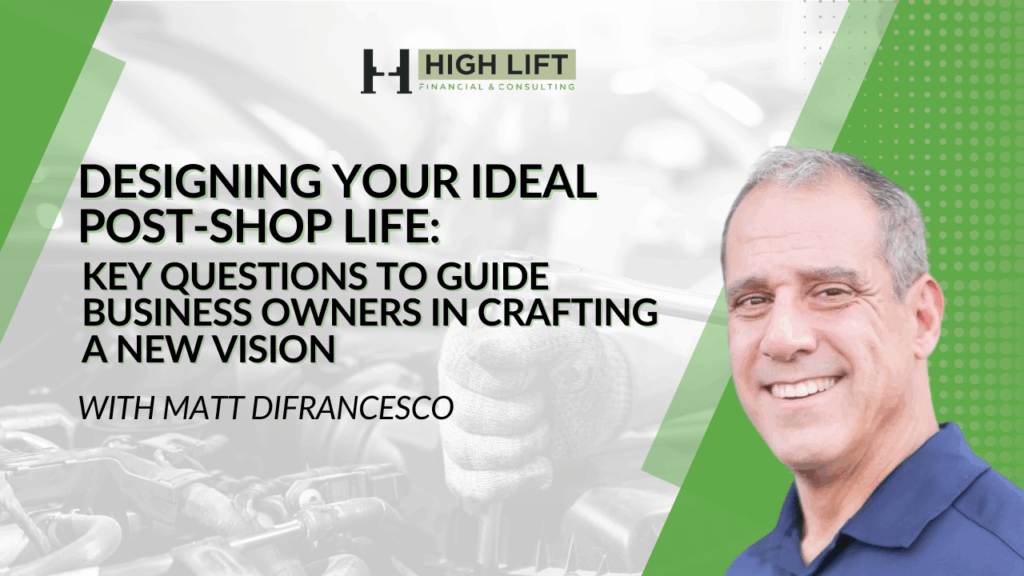
Designing your ideal post-shop life is more than just planning for retirement. It’s about crafting a new chapter that gives you purpose, fulfillment, and financial freedom. The truth is, the sooner you begin thinking about life after the shop, the smoother your transition—and the greater your satisfaction—will be.
Below are five key questions to help guide that process.
If you plan to sell your business soon and need an exit strategy, schedule a free 20-minute conversation with Matt DiFrancesco. Discuss your vision and find out how you can adjust the nuts and bolts of your business and life to become prosperous.
1. What Does Fulfillment Look Like for Me Beyond the Business?
For years, your identity may have been tied to your role as an owner. You made decisions, led a team, and solved problems daily. That level of involvement and purpose doesn’t disappear overnight. One of the biggest challenges owners face after exiting is a sense of loss—loss of structure, routine, and meaning.
So, before you think about the financial side, start with the emotional one. Ask yourself:
- What activities or causes make me feel most alive?
- If I didn’t have to think about money, how would I spend my days?
- Who do I want to impact or mentor with the knowledge I’ve gained?
You may find that fulfillment doesn’t necessarily mean slowing down—it may mean redirecting your energy. Many shop owners find joy in mentoring young technicians, investing in other small businesses, or giving back to their communities through industry associations or local programs.
Defining fulfillment early helps ensure your next chapter feels intentional rather than reactive.
2. What Lifestyle Do I Want—and What Will It Take to Support It?
Once you’ve defined what fulfillment looks like, it’s time to quantify it. The lifestyle you envision—whether it’s traveling, spending more time with family, or pursuing new ventures—comes with financial implications.
Too often, owners sell their businesses without a clear understanding of how that sale will translate into sustainable income. Instead of focusing solely on the sale price, focus on what you need to live your ideal life comfortably and confidently.
Consider these questions:
- What will my monthly and annual expenses look like post-exit?
- Will I still have debt, business obligations, or family support commitments?
- Do I want to maintain, simplify, or elevate my current lifestyle?
Working with a financial planner who understands business transitions can help bridge the gap between your desired lifestyle and your financial reality. A solid plan should align your income streams—whether from the sale proceeds, investments, or ongoing consulting—with your long-term goals.
3. How Will I Redefine My Identity After I Exit?
For decades, you’ve likely introduced yourself as a shop owner. That title carried weight and recognition. But once you step away, your identity shifts—and that can be both liberating and unsettling.
Redefining who you are post-shop requires conscious effort. It’s about separating your role from your purpose. Ask yourself:
- Outside of being a business owner, who am I?
- What parts of that identity do I want to keep?
- What new roles am I excited to explore—mentor, investor, traveler, volunteer?
Your post-shop identity should reflect who you’ve become through the years of owning and growing your business—not just what you’ve done. This mindset shift helps you transition gracefully from being “needed” in the shop to being valued for your wisdom and experience elsewhere.
4. Who Do I Want to Spend My Time With?
Running a collision shop often means long hours, little vacation, and a small inner circle of colleagues who understand your world. After an exit, your time opens up—but the question becomes: how do you want to use it, and with whom?
Many owners underestimate how social structure impacts their happiness. As you design your post-shop life, consider relationships intentionally.
- Which relationships have I neglected that I want to rebuild?
- Do I want to spend more time with family or reconnect with friends outside the industry?
- What kind of community do I want to be part of next?
Some former owners find meaning in joining industry boards or networking groups; others seek entirely new circles aligned with their hobbies or personal interests. Think of this as designing your personal ecosystem—a support network that energizes you in this next stage.
5. How Will I Continue to Grow?
The best business owners are lifelong learners. You’ve adapted to new technologies, market shifts, and industry standards. That same growth mindset is what will make your post-shop life rich and meaningful.
Growth doesn’t always mean starting another business (though some do!). It might mean exploring personal development, travel, or pursuing a long-delayed passion project.
Ask yourself:
- What new skills or interests do I want to develop?
- Are there ways I can use my experience to teach, coach, or invest in others?
- How can I challenge myself outside of business ownership?
Growth keeps you mentally sharp and emotionally engaged. Whether it’s enrolling in a course, writing a book, or mentoring future entrepreneurs, continual learning ensures your next chapter is one of evolution—not stagnation.
Bringing It All Together
Designing your ideal post-shop life isn’t a one-time exercise—it’s a process of reflection, discovery, and alignment. The key is to start before you exit. When you have clarity on what comes next, every decision you make leading up to your transition—from the sale structure to your team handoff—becomes easier and more purposeful.
Your business has likely provided freedom and stability for your family. Now, it’s time to ensure that same sense of freedom applies to you.
Take the time to envision your future, ask yourself the hard questions, and surround yourself with the right advisors who can help turn that vision into reality. Because life after the shop shouldn’t feel like the end of something—it should feel like the beginning of everything you’ve been working for.
What if the years you’ve invested in building your collision shop could set you up—not just for retirement—but for a life of freedom, purpose, and lasting impact?
At High Lift Financial, we help shop owners like you design your ideal post-shop life—a life built on more than just the number on your sale agreement. Our team understands that after years of pouring yourself into your business, stepping away isn’t simply a financial decision—it’s a personal transformation. That’s why we guide you through every step of aligning your wealth, values, and vision to create a fulfilling next chapter.
Your next chapter starts with a conversation. Schedule a a free strategy consultation today, and let’s begin designing the life you’ve worked so hard to earn—after the shop.
Here are other resources related to this topic that you may want to check out:
- The Essential vs. Incidental Owner: Navigating Business Success in Collision Shops
- Transform Your Business: The Perks of Incidental Ownership
- Preparing Your Collision Shop for Sale: Key Steps to Maximize Value
Disclaimer
All information is obtained from sources deemed reliable, but not guaranteed. No tax or legal advice is given nor intended. Content provided herein or on our website should not be construed as an offer for investment advice or for securities, insurance, or other investment products. Investments involve the risk of loss and are not guaranteed. Consult a qualified legal, tax, accounting, or financial professional before implementing any investments or strategy discussed here.
High Lift Financial is a DBA for DiFrancesco Financial Concierge, LLC. Investment advisory services are provided through Cornerstone Planning Group, LLC, an independent advisory firm registered with the Securities and Exchange Commission.