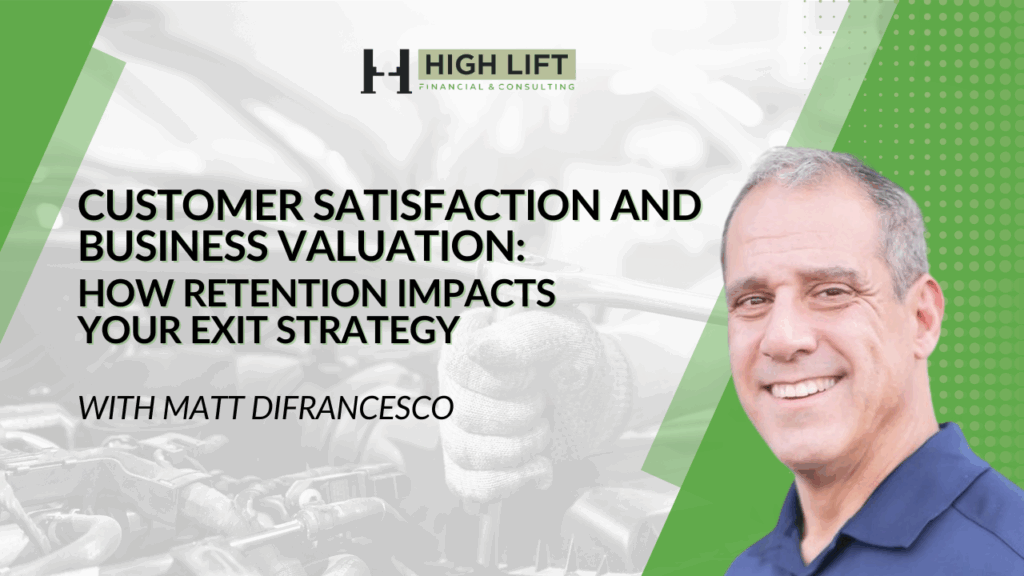
In the collision repair industry, most owners understand the importance of keeping customers happy. Repeat business and referrals keep the doors open, and word of mouth remains one of the most powerful drivers of growth.
But what many shop owners underestimate is just how critical customer satisfaction and loyalty are to the long-term valuation of their business—especially when it comes time to exit.
Whether you plan to sell to a consolidator, transition to a family member, or hand the business off to key employees, customer retention and satisfaction scores are among the factors buyers look at most closely.
A shop’s ability to keep customers coming back doesn’t just reflect good service—it translates directly into predictable revenue, reduced marketing costs, and higher enterprise value.
If you plan to sell your business soon and need an exit strategy, schedule a free 20-minute conversation with Matt DiFrancesco. Discuss your vision and find out how you can adjust the nuts and bolts of your business and life to become prosperous.
Why Customer Satisfaction Matters Beyond the Front Counter
For many collision shop owners, the focus is naturally on daily operations: quality repairs, insurance relationships, and cycle time.
While these elements matter, they don’t always show the bigger picture. Buyers and successors want to know how stable and dependable your revenue stream is—and nothing proves that more clearly than satisfied customers who return and refer others.
Customer satisfaction is more than just a feel-good metric. In a consolidator’s or investor’s eyes, it is evidence of:
– Revenue Stability: A loyal customer base reduces volatility, making income more predictable and less reliant on costly marketing campaigns.
– Brand Strength: Positive reviews and high Net Promoter Scores (NPS) show that your business has earned community trust.
– Reduced Risk: Shops with strong retention demonstrate resilience against competition or downturns.
When buyers run their due diligence, they want to see proof that your customers aren’t just one-and-done repair jobs. They’re looking for measurable loyalty.
Measuring Customer Loyalty in Collision Repair
So, how do you know if your shop is building the type of loyalty that drives value? A few key indicators stand out
– Net Promoter Score (NPS): One of the most widely used benchmarks, NPS measures how likely customers are to recommend your shop. High scores signal strong word-of-mouth potential, which buyers equate with future growth.
– Customer Retention Rate: How many customers return after their first repair? Tracking repeat business gives a clear view of loyalty.
– CSI (Customer Satisfaction Index) Scores: These are commonly tracked in the industry, often by insurers. High CSI scores show insurers and buyers alike that your shop consistently meets expectations.
– Online Reviews and Reputation: In today’s market, Google reviews and social media presence carry significant weight. A history of positive reviews reduces buyer concerns about reputation management.
The collision repair business can be unpredictable—accidents are not a planned purchase—but the perception of your shop as the “go-to” choice in your market is a competitive advantage that buyers will pay for.
Building Customer Loyalty Before Your Exit
If you’re considering an exit in the next three to five years, strengthening customer satisfaction should be part of your strategy. Here are a few steps to consider:
– Create a Seamless Customer Experience: From the first call to final vehicle delivery, every touchpoint should feel professional, transparent, and stress-free. Buyers look for processes that are consistent and repeatable.
– Invest in Communication: Customers value being kept in the loop during repairs. Shops that use text updates or online portals build trust and earn higher satisfaction scores.
– Follow Up After Repairs: A simple follow-up call or email asking about the customer’s experience can turn a neutral interaction into a positive review and referral.
– Track and Report Metrics: Don’t just assume customers are happy—measure it. Regularly tracking NPS, retention rates, and CSI scores allows you to demonstrate success to a buyer.
– Empower Your Team: Loyal customers are often loyal to the people, not just the brand. Investing in training and empowering your front-office staff and technicians ensures consistency across the customer experience.
Making Customer Satisfaction Part of Your Exit Story
When you sit down with a potential buyer, your financial statements tell one part of the story, but your customer satisfaction record tells another. Imagine presenting a buyer with not just revenue and profit numbers, but also three years of data showing:
– Consistently high NPS scores
– A strong percentage of repeat business
– A track record of glowing online reviews3+ years of financial statements
That narrative signals that your shop isn’t just profitable today—it’s positioned for sustainable success under new ownership.
Final Thoughts:
In the collision repair industry, many owners focus solely on financial performance when preparing for an exit. While profitability is crucial, customer satisfaction and loyalty are equally powerful drivers of value.
A shop that demonstrates consistent customer retention provides buyers with confidence, reduces perceived risk, and commands higher multiples.
If you want to maximize your exit strategy, don’t overlook the human side of the business.
Every happy customer is more than just a completed repair—they’re a long-term asset that strengthens your brand, secures your revenue, and ultimately, boosts the valuation of your business.
What if the biggest driver of your shop’s future value isn’t just revenue or profit, but how satisfied and loyal your customers are?
At High Lift Financial, we know that when buyers evaluate a collision repair business, they’re looking far beyond the numbers. They want proof of stable, repeatable revenue—and nothing demonstrates that better than customer satisfaction and retention.
Imagine walking into an exit conversation backed not just by financials, but by years of proven customer retention data. That’s leverage—and it puts you in control of your exit strategy.
Your customers are more than transactions—they’re assets that fuel your business value. Let High Lift Financial guide you in turning customer satisfaction into a competitive advantage and a higher exit price.
Schedule a free strategy consultation with High Lift Financial today to start building value you’ll one day cash in on.
Here are other resources related to this topic that you may want to check out:
- The Role of Customer Satisfaction in Business Valuation
- Exit Strategies: Personal Vision & Financial Planning
- Preparing Your Collision Shop for Sale: Key Steps to Maximize Value
Disclaimer
All information is obtained from sources deemed reliable, but not guaranteed. No tax or legal advice is given nor intended. Content provided herein or on our website should not be construed as an offer for investment advice or for securities, insurance, or other investment products. Investments involve the risk of loss and are not guaranteed. Consult a qualified legal, tax, accounting, or financial professional before implementing any investments or strategy discussed here.
High Lift Financial is a DBA for DiFrancesco Financial Concierge, LLC. Investment advisory services are provided through Cornerstone Planning Group, LLC, an independent advisory firm registered with the Securities and Exchange Commission.